

Crowns and Bridges
Description
What is a Crown?
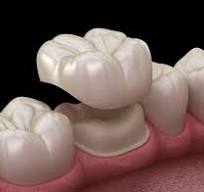
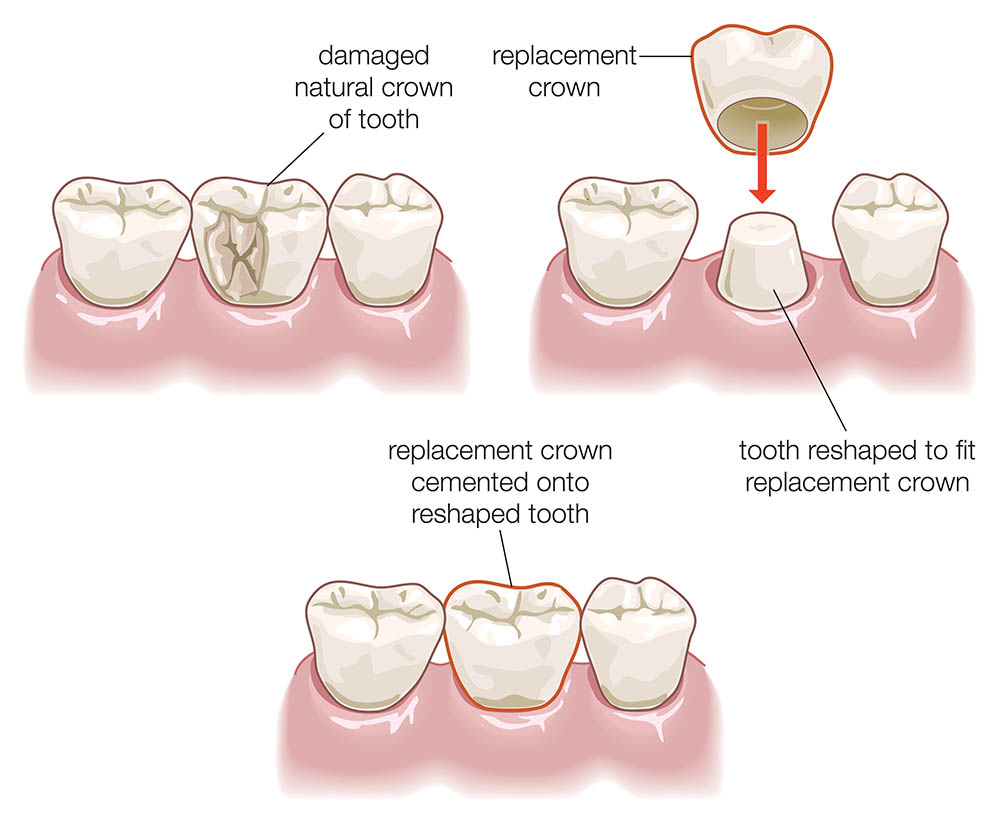
A “dental crown” is a term familiar to most people, though some refer to it as a “cap.” There are actually two uses of the term crown in dentistry. We use the word crown to describe the anatomical portion of each tooth that protrudes out of the gums and bone. The crown of the tooth does not include the tooth’s roots, and in a healthy tooth, enamel covers the entire crown.
A crown may also refer to a specific type of dental restoration that covers the entire anatomical crown of a tooth. A dental crown typically covers the exposed portion of a tooth (we call this full coverage) and replaces all of its enamel.
What is a Bridge?
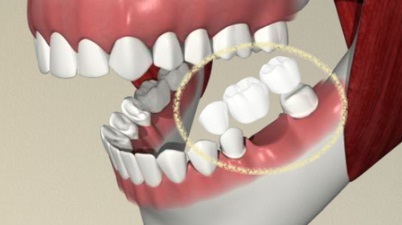
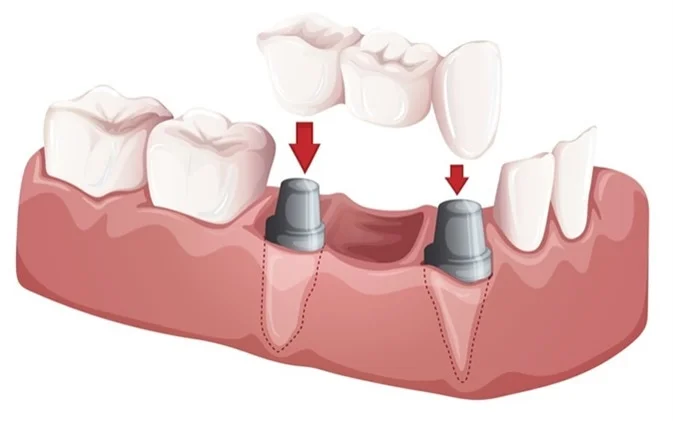
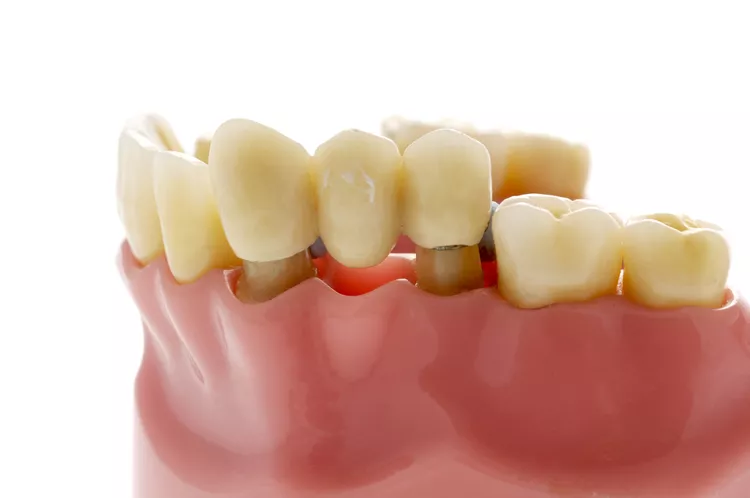
A bridge is a dental treatment that uses multiple crowns connected together in order to replace a missing tooth. At the minimum, a bridge includes two crowns on either side of a “fake” tooth called a pontic. Bridges are classified according to the number of units, which just means the number of teeth they cover. The most common is a three-unit bridge, which uses two teeth as anchors for one replacement tooth.
The materials of a bridge are the same as those available for crowns. Because a bridge uses connections between teeth, it requires some changes to your oral hygiene routine in order to keep the anchor teeth healthy. A bridge is a relatively quick way to replace a missing tooth, requiring only a few weeks of lab time. Bridges are permanently cemented onto the anchor teeth; they are not removable by the patient. A bridge is an alternative tooth replacement option to a dental implant.
When is a Crown or Bridge required?
• A tooth has been broken or destroyed
• A tooth has been compromised by too much decay.
• a tooth has a dark discolouration
• A tooth is crooked.
• An anchor is required for a dental bridge.
Crown and Bridges Process
In order to make a crown or bridge that fits perfectly, your dentist first prepares the tooth itself. Preparation involves removal of the enamel layer so that the crown can replace it without making the restoration bulky or uncomfortable. We also remove any existing decay or filling material. Basically, we get down to healthy tooth structure and rebuild from there.
Enamel is the protective coating of a tooth, and without it, the tooth is sensitive to hot and cold. This is why a dental crown preparation typically requires local anesthetic (but it is not necessary when the tooth has a root canal treatment, because there is no longer a nerve inside to feel that discomfort). This is also why we must cover the tooth with a temporary crown for the time necessary to make the final crown. A temporary crown insulates the tooth from uncomfortable sensations and holds the space for the final crown.
In general, both crowns and bridges are a two-visit process, with the temporary phase in between the two visits.
Visit One:
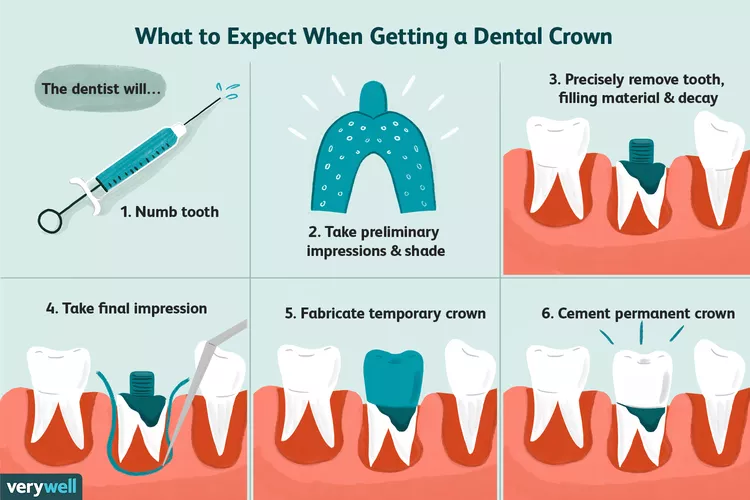
- A local anesthetic is applied to ensure your comfort.
- We prepare the tooth for the crown by shaping the outer tooth structure and removing any existing decay or filling material.
- Severely broken down portions of the tooth may need to be rebuilt. This will feel like getting a filling.
- In our office, an intraoral 3D scan of the prepared tooth is captured to send an exact replica to the dental lab. No more gooey, uncomfortable impression molds!
- We make a temporary crown that fills in the space and protects the tooth, then affix it to your tooth using temporary dental cement.
- This is your temporary crown. Specific care instructions will be provided until we see you again.
Visit Two:
- Local anesthetic is available upon request if the tooth is sensitive. It is not always required for this visit.
- The temporary crown is removed and excess temporary cement is cleaned away.
- We place the final crown on the tooth and confirm the correct fit with a close-up x-ray.
- Any necessary adjustments will be made to the bite until your new crown feels perfectly comfortable.
- We use a permanent dental cement to attach the crown to your tooth.

